Have you ever opened a jar of ground cumin that sat in your cupboard for eight months and noticed that it smelled mostly like dry dust? Compare that with crushing a single whole cumin seed between your thumbnails. The crushed seed releases an intense, warm aroma that fills the immediate air around your hands. Both items started as the same botanical seed, yet they behave like entirely different ingredients in a skillet. Why does this discrepancy happen so consistently across every spice variety?
The difference comes down to basic plant biology and the physics of surface area. When you buy pre-ground powder, you are paying for convenience, but you are also buying an ingredient that has already surrendered its most delicate compounds to the atmosphere. Whole spices, by contrast, are tiny storage vessels designed by nature to protect their contents from the elements until the moment you decide to break them open. Understanding how these enclosures function changes how you season food, helping you coax deeper flavors out of ordinary kitchen staples without needing complex equipment.
The Science of Whole Seed Enclosures
What is a spice before it reaches a jar? In botanical terms, spices come from distinct parts of aromatic plants. Black pepper and allspice are dried berries. Cumin, coriander, fennel, and cardamom are seeds or dried fruit pods. Cinnamon is tree bark, and cloves are unopened flower buds. Regardless of their plant origin, these structures evolved to protect an embryo or preserve the plant tissue against environmental stress, insect attacks, and premature decay.
To accomplish this protection, the plant surrounds its volatile organic compounds with a dense exterior jacket known as the pericarp or seed coat. Volatile organic compounds are the aromatic oils that our noses and tongues register as flavor. In coriander, the dominant compound is linalool, which gives the seed its sweet, citrus character. In cumin, the compound is cuminaldehyde. In black pepper, it is piperine alongside sharp terpenes like pinene and limonene. The plant stores these delicate molecules inside microscopic chambers, deep within cellular walls made of tough cellulose and lignin.
Think of a whole seed as a collection of microscopic, airtight glass vials packed inside a wooden box. As long as the outer shell remains intact, moisture and air cannot enter, and the volatile oils inside cannot slip out. The seed holds its chemical profile in a state of suspended animation. This protective shield allows whole coriander seeds found in archaeological tombs to retain measurable traces of their characteristic aroma thousands of years later, whereas an opened jar of ground coriander loses its bright top notes in roughly twelve weeks.
| Spice | Botanical Structure | Key Aromatic Compounds | Primary Protective Shell |
|---|---|---|---|
| Black Pepper | Dried fruit (drupe) | Piperine, pinene, limonene | Wrinkled outer pericarp |
| Coriander | Dried split fruit (schizocarp) | Linalool, geranyl acetate | Hard ribbed hull |
| Cardamom | Seed pod (capsule) | Terpinyl acetate, cineole | Fibrous outer husk enclosing oily seeds |
| Cumin | Dried seed (mericarp) | Cuminaldehyde, cymene | Fused seed coat with oil canals |
How Oxygen Degrades Ground Powders Over Time
What actually happens inside an industrial spice mill when seeds are processed into powder? The machinery crushes the seed coats into thousands of microscopic fragments. In an instant, those microscopic oil vials shatter. The total surface area of the spice expands by a factor of several hundred. If a single peppercorn has a surface area of less than one square centimeter, pulverizing that same peppercorn into fine baker-style grind exposes roughly forty to sixty square centimeters of interior surface area to the ambient air.
This massive expansion of surface area triggers two rapid chemical processes: volatilization and oxidation. Volatilization is the physical escape of lighter molecules into the gas phase. The lightest terpenes, which provide floral, citrus, and herbal nuances, possess low boiling points and evaporate at normal room temperatures. When you open a factory-sealed jar of pre-ground spice and smell a brief puff of aroma, you are smelling compounds that have escaped the powder and gathered in the headspace of the container. Once that air clears, those specific molecules are gone from the powder permanently.
Oxidation is the subsequent chemical breakdown. Oxygen molecules in the air collide with the remaining heavier oils, stripping away electrons and altering their chemical structures. For example, pinene oxidizes into verbenone, which tastes flat, medicinal, and dull. The sharp, vibrant burn of fresh pepper turns into an earthy, stale bitterness. Pre-ground powders also pull water vapor out of the air because dry ground starch and fiber are hygroscopic, meaning they absorb environmental moisture. This moisture accelerates enzymatic breakdown and causes the fine grains to clump, further deadening their ability to dissolve smoothly into cooking fats.
Using a Mortar Against an Electric Blade
Once you decide to grind spices at home, the tool you choose determines the texture and the chemical release of the oils. The two most common household tools are the stone mortar and pestle and the electric blade grinder. While both tools reduce large pieces into small particles, they achieve that size reduction through completely different mechanical actions.
A heavy granite mortar works by compression and shearing. When you press the heavy pestle down and drag it across the textured stone bowl, you are not cutting the seeds. You are crushing the plant cells against one another. This heavy crushing action bursts the internal oil glands and forces the aromatic oils out onto the broken bits of seed coat, creating a wet, glistening paste or coarse powder. The oils coat the dry particles directly instead of flying off into the atmosphere. Because the work is manual and gradual, the stone stays cool, preserving heat-sensitive flavor notes that would otherwise evaporate.
An electric spice grinder relies on high-speed impact. A flat metal blade spins at twelve thousand to twenty thousand revolutions per minute, hacking through seeds like a mower blade through dry branches. This high speed introduces friction, and friction produces heat. If you run an electric blade grinder continuously for twenty-five seconds, the metal base of the cup can reach temperatures above forty-five degrees Celsius. That heat causes the most volatile aromatics to vaporize inside the chamber before the spice ever touches your cooking pot.
| Tool Type | Mechanical Action | Heat Buildup | Best Kitchen Application |
|---|---|---|---|
| Granite Mortar and Pestle | Crushing, shearing, pressing | Negligible | Coarse pepper, cracked coriander, curry pastes |
| Electric Blade Grinder | High-speed impact cutting | Moderate to high | Large batches, hard roots (turmeric), fine baking powders |
| Burr Grinder (Manual Mill) | Uniform shear between plates | Low | Table pepper, finishing spices |
To get the best performance from an electric blade grinder without overheating your spices, use short pulses lasting two to three seconds each. Shake the grinder gently between pulses so larger seeds drop back down toward the blade path. This pulsing technique keeps the metal chamber cool and prevents the delicate oils from scorching against the bottom plate.
Warming Seeds Dry to Awaken Aroma
Why do traditional culinary techniques across India, Mexico, and the Middle East insist on warming whole seeds in a dry pan before grinding or stewing them? Raw seeds contain bound moisture, roughly eight to twelve percent of their total weight. This water acts as a buffer that traps aromatics inside the cellular matrix. Applying dry heat changes the physical texture of the seed and alters its chemical balance through low-temperature thermal reactions.
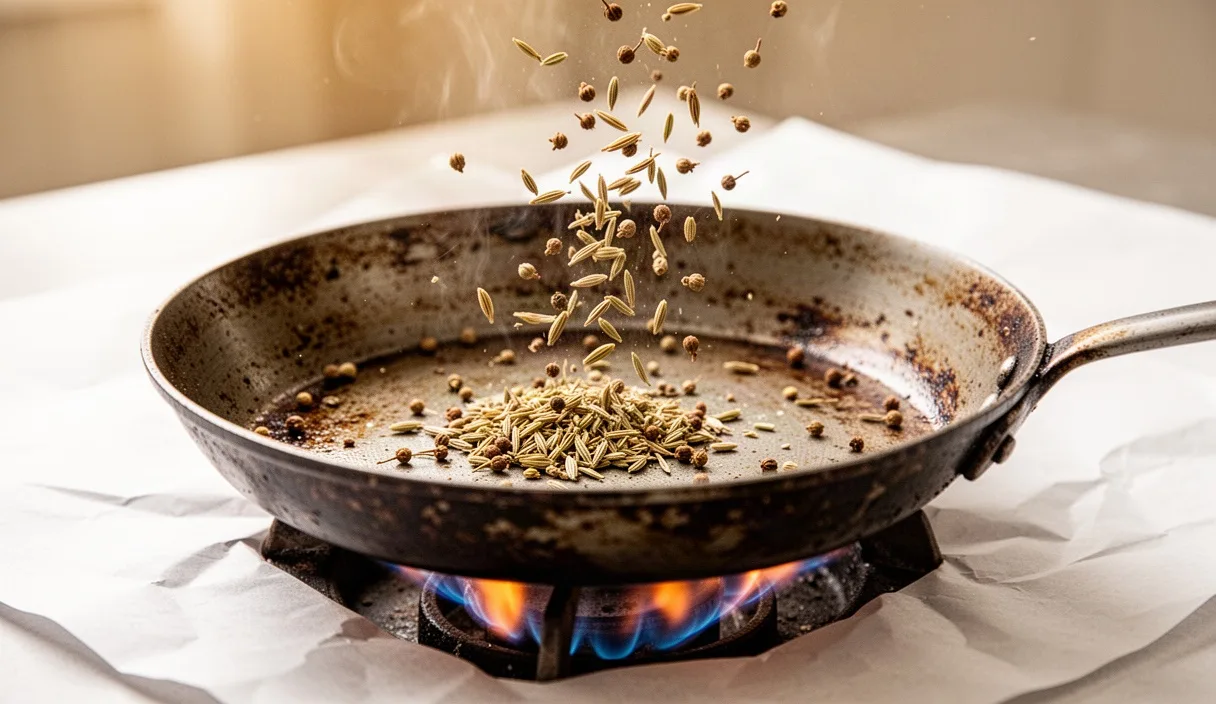
When whole seeds hit a warm skillet, heat transfers through the outer seed coat. The small pocket of moisture inside turns to steam, slightly expanding the seed structure and making the brittle cellulose walls much easier to shatter in a mortar. Simultaneously, the heat lowers the viscosity of the essential oils, thinning them out so they migrate from the deep interior cavities toward the surface of the seed. You can see this happen in real time: cumin and mustard seeds turn glossy and darken slightly as their internal lipids reach the outer coat.
Dry heating also initiates mild Maillard reactions, the chemical interactions between amino acids and reducing sugars that create roasty, savory flavors. It produces pyrazines, which add nutty, toasted notes that balance the raw bitterness found in raw seeds. Here is how to execute this process without scorching your ingredients:
- Selecting the pan: Use a heavy stainless steel or cast iron skillet. Thin aluminum pans develop hot spots that can burn small seeds in less than fifteen seconds.
- Managing the heat: Set the stove to medium-low. Do not add oil, butter, or water. The goal is dry heat transfer.
- Monitoring the seeds: Add the whole spices in an even, single layer. Keep the pan moving constantly by swirling the handle or stirring with a wooden spoon.
- Reading the sensory cues: Watch for the seeds to lighten or deepen by a single shade, listen for faint popping sounds (especially with mustard or coriander), and remove the pan from heat the moment you detect a clear, clean wave of aroma. This typically takes between seventy and one hundred forty seconds.
- Cooling completely: Immediately pour the toasted seeds out of the hot pan onto a wide ceramic plate. If you leave them in the hot pan off the stove, residual metal heat will burn the bottoms of the seeds. Let them reach room temperature before grinding, because grinding hot seeds creates steam that turns the powder into a dense, gummy paste.
Storage Habits That Keep Seeds Fresh
Once you bring whole spices into your kitchen, how do you prevent them from breaking down? Spices do not spoil in the way dairy or meat does. They do not quickly grow dangerous pathogens if kept dry, but they undergo a slow sensory death caused by four environmental factors: heat, light, air, and moisture.
Many home cooks place spice racks directly above the stovetop or alongside the oven range. This is the worst location in the kitchen. Every time you boil pasta or simmer a stock, warm steam rises directly past those jars. The heat from your burners warms the jars repeatedly, accelerating the rate of chemical oxidation and driving off volatile aromatics. Store your spice jars in a cool, dark drawer, inside an enclosed pantry cabinet, or on a shelf positioned well away from any heat source or direct sunlight.
The container material also matters. Clear glass jars look attractive, but ultraviolet and visible light rays penetrate clear glass and break down pigment molecules like carotenoids and curcumin, turning bright red paprika brown and vibrant yellow turmeric dull gray. When light degrades these pigments, it degrades the flavor molecules attached to them. Use dark amber glass jars, opaque food-grade tins, or keep clear glass jars tucked inside a completely dark drawer.
Whole seeds remain structurally viable and aromatic for two to three years when stored away from light and heat. Pre-ground spices, even in unopened jars, begin to show noticeable flavor degradation after three to four months. By keeping spices whole and crushing only the volume required for that evening's meal, you maintain direct control over freshness.
Common Mistakes
- Shaking jars directly over steaming pots: Tipping an open spice container over a simmering pan allows rising steam to enter the jar. That moisture causes ground powders to cake and introduces fungal spores to whole seeds. Measure spices into a small prep bowl or your palm away from the stove instead.
- Dry-toasting pre-ground spices: Ground powder cannot handle direct dry heat in a skillet. Because the surface area is immense and the particles are tiny, ground spices will char, turn black, and taste intensely bitter within five seconds. Only toast whole spices dry; bloom ground spices gently in warm cooking oil or butter instead.
- Storing spices inside the refrigerator: Cold temperatures do not benefit dry spices. Each time you pull a chilled jar into warm room air, condensation forms on the inside surface of the container, exposing the seeds to ambient moisture.
- Grinding massive batches in advance: Crushing enough whole cumin to fill an entire jar defeats the purpose of buying whole spices. Grind only what your current recipe requires, or at most, what you will consume within seven days.
Practical Steps for Transitioning Your Spice Rack
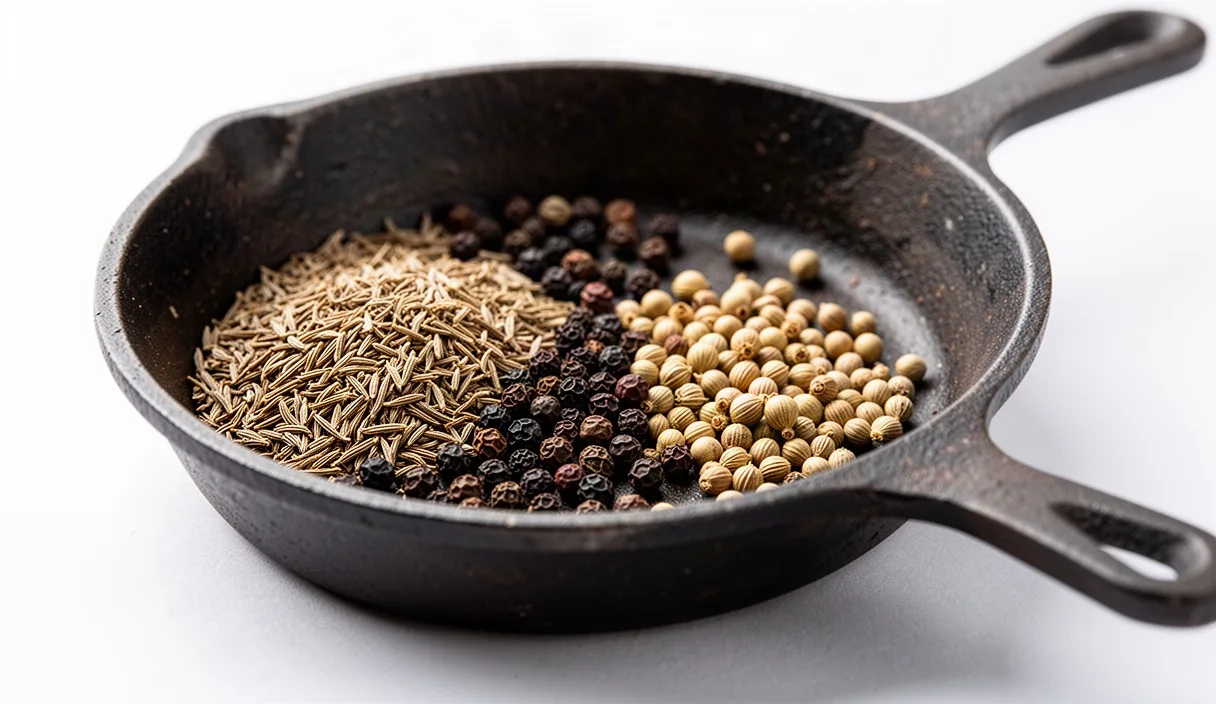
You do not need to discard every ground jar in your kitchen overnight. A sensible transition starts with high-impact spices where the difference between pre-ground and freshly crushed is most noticeable. Begin with black peppercorns, cumin seeds, and whole coriander seeds. These three work across an enormous variety of global culinary traditions and show immediate results in daily meals.
Visit an international market, an independent spice merchant, or a bulk grocery section rather than buying small, expensive supermarket jars. Bulk bins allow you to buy smaller quantities, ensuring you receive stock that has not sat on warehouse pallets for eighteen months. Look for whole seeds that are uniform in color, free of excessive dust or broken twigs, and distinctly fragrant even through their transport bags.
Set a heavy mortar and pestle on your kitchen counter where it remains accessible, rather than hiding it in a low cabinet. When an evening recipe calls for a teaspoon of ground cumin, measure out a level teaspoon of whole cumin seeds, warm them briefly in a dry pan, tip them into the mortar, and crush them with three or four firm circular motions. The physical process takes under two minutes, but the resulting depth, aroma, and complexity will permanently change your understanding of what spices can do.