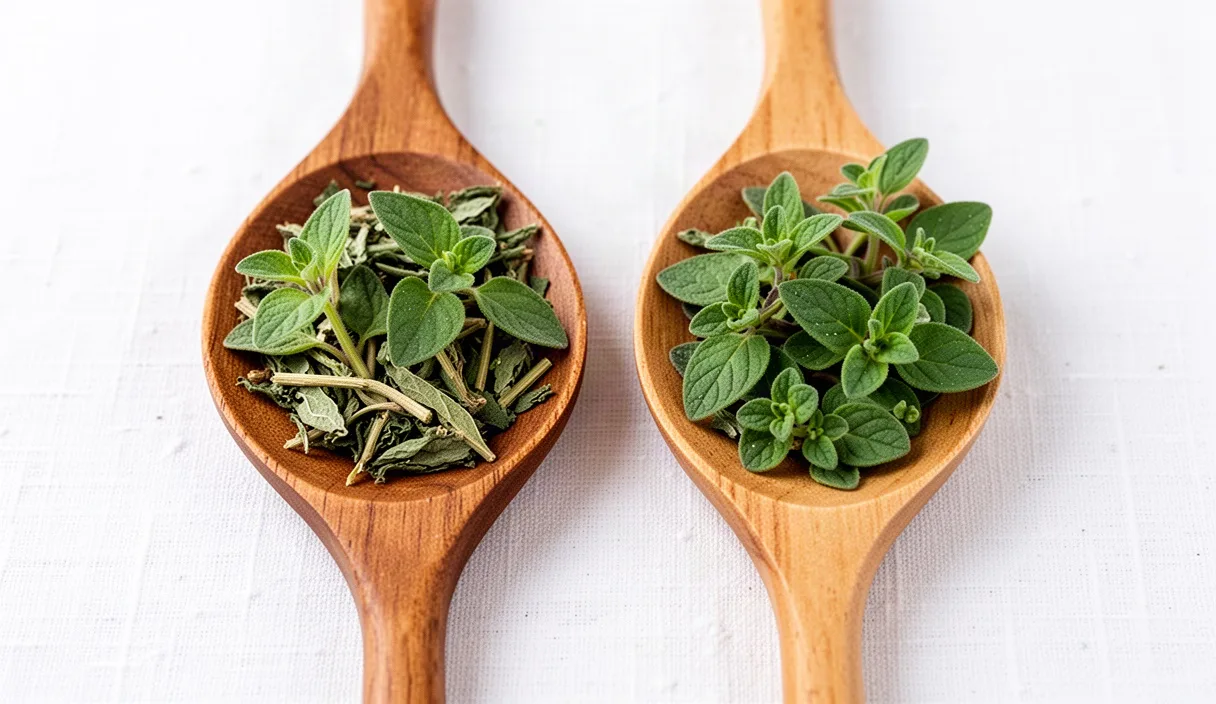
When you walk down the spice aisle, you might see two glass jars sitting right next to each other, both labeled oregano. One jar holds pale green flakes from Greece or Italy, while the other holds slightly larger, grayer leaves from Mexico. If you smell them side by side, your nose instantly notices that they do not share the same perfume. One smells warm, herbal, and sharp like pizza sauce, while the other carries a bold scent reminiscent of citrus peel, licorice, and roasted peppers.
Why do two seasonings that look almost identical behave so differently in a hot pan? The short answer is that they come from completely different plant families, grow in different soils, and rely on different chemical compounds to produce their scent. Understanding how these two herbs differ will help you choose the right jar every time you build a soup, braise meat, or simmer a slow-whistling pot of beans.
Two Unrelated Plants Sharing One Common Name
How did two different botanicals end up with the same name on grocery store labels? When Spanish explorers arrived in the Americas during the sixteenth century, they encountered a wild shrub used by Indigenous cooks to season fish, wild game, and sauces. Because the aroma reminded the explorers of the wild oregano growing on the rocky hillsides of their homeland, they called it oregano as well. In botany, this naming overlap is known as a vernacular synonym, where everyday language links plants that have no direct family connection.
Mediterranean oregano belongs to the mint family, known scientifically as Lamiaceae. Its most common botanical name is Origanum vulgare, though closely related subspecies like Greek oregano (Origanum vulgare hirtum) and Italian varieties dominate culinary use. These are low-growing, perennial herbs that thrive across southern Europe, Turkey, and northern Africa. If you look closely at fresh Mediterranean oregano, you see soft, slightly fuzzy oval leaves that branch off square stems, a classic hallmark of the mint family.
Mexican oregano belongs to the verbena family, known as Verbenaceae. Its botanical name is Lippia graveolens. This plant grows as an upright, woody shrub reaching up to two or three meters in height throughout the arid regions of Mexico, Guatemala, and the southwestern United States. The leaves are typically coarser, drier, and more brittle than Mediterranean varieties. While Mediterranean oregano thrives in temperate maritime conditions, Mexican oregano grows under intense sunlight and high heat, which forces the plant to build thick defensive oils inside its leaf cells.
| Trait | Mediterranean Oregano | Mexican Oregano |
|---|---|---|
| Botanical Family | Lamiaceae (Mint family) | Verbenaceae (Verbena family) |
| Primary Botanical Name | Origanum vulgare | Lippia graveolens |
| Plant Type | Low-growing perennial groundcover | Tall, woody arid shrub |
| Dominant Aroma | Earthy, sweet mint, pine, warm wood | Pungent citrus, camphor, anise, pepper |
| Primary Regions | Greece, Italy, Turkey, Spain | Northern and Central Mexico, New Mexico |
Citrus Profiles Versus Earthy Mint Notes
What makes these herbs smell and taste so distinct from each other? The flavor of any dried herb comes from its essential oils, which are volatile aromatic hydrocarbons stored within microscopic leaf pockets. In both plants, two specific compounds form the baseline of flavor: carvacrol and thymol. Carvacrol provides that biting, medicinal, classic oregano punch, while thymol adds an astringent, herbal warmth similar to garden thyme.
The difference lies in the supporting compounds that surround that carvacrol baseline. Mediterranean oregano contains high levels of pinene and sabinene. These molecules deliver aromas reminiscent of pine needles, wet forest floor, sweet marjoram, and cool mint. When you cook with Greek or Italian oregano, the heat releases a gentle sweetness that balances the bitterness of cooked nightshades and rounded cuts of pork.
Mexican oregano carries a completely different secondary chemical profile. It contains significant amounts of limonene and cineole, along with traces of methyl chavicol. Limonene smells like tart citrus zest, cineole carries the sharp, clearing quality of eucalyptus, and methyl chavicol introduces a subtle note of black licorice or anise. This means Mexican oregano hits your tongue with a sharper, more piercing tone that cuts right through rich animal fat, smoke, and dried chile paste.
Matching Oregano to Tomato and Bean Dishes
How should you decide which variety to reach for during your weeknight prep? The simplest rule relies on culinary geography: match the herb to the traditional cuisine of the dish you are cooking. Because these plants evolved alongside regional cooking methods, their chemical compounds complement the fats, acids, and starches commonly used in those areas.
Consider a pot of braised pinto beans or black beans cooked with lard and onions. Beans have a heavy, earthy starch profile that can taste flat without adequate seasoning. Adding Mexican oregano cuts that heaviness. The citrus notes of limonene wake up the dense broth, while the heat-resistant cineole survives several hours of gentle simmering without breaking down into bitterness. In Mexican mole, pozole, or chili con carne, this sharp brightness stands tall against fiery chiles like ancho, guajillo, and chipotle.
Now consider a classic Italian marinara or a slow-simmered ragu bolognese. Tomatoes possess high levels of natural acidity from citric and malic acid. If you drop Mexican oregano into a simple tomato sauce, the intense citrus-verbena profile can clash with that existing acid, making the sauce taste medicinal or unpleasantly tart. Mediterranean oregano, by contrast, brings sweet mint tones and thymol woodiness. These undertones soften the sharp edge of cooked tomato pulp and weave comfortably into olive oil and garlic.
- Slow-simmered tomato sauces and pizza: Choose Mediterranean oregano to complement sweet garlic, basil, and olive oil without sour overtones.
- Vinaigrettes for crisp green salads: Use Mediterranean oregano, whose gentle pine notes blend harmoniously with red wine vinegar and raw cucumbers.
- Chili, braised pork carnitas, and barbacoa: Reach for Mexican oregano, which pierces rich pork fat and holds its own against roasted cumin and dried chiles.
- Bean broths and vegetable pozole: Mexican oregano adds an aromatic citrus lift that prevents long-simmered legumes from tasting one-dimensional.
Crushing Leaves by Hand to Wake Dormant Oils
Why does whole dried oregano taste almost inert straight from the jar, yet explode with aroma once you rub it between your hands? When an herb dries, its plant moisture evaporates, but the volatile oils remain sealed inside tiny microscopic chambers on the surface of the leaf called glandular trichomes. If you dump whole dried leaves directly into a warm sauce without disturbing them, the water in the sauce must slowly hydrate the dried cell walls before the oils can escape.
To release those oils instantly, you need physical friction. The process takes less than ten seconds and fundamentally changes the speed of flavor transfer in your cooking.
- Measure the amount of dried oregano called for in your recipe into the palm of your non-dominant hand.
- Bring your dominant palm down firmly over the leaves, creating a tight pocket between both hands.
- Rub your hands back and forth in a vigorous, circular grinding motion over the open pot or mixing bowl.
- Notice the change in aroma: within three or four seconds, the dry friction fractures the brittle trichome shells, releasing the trapped oils directly into the rising steam.
- Allow the fine leaf fragments to drop directly into the cooking liquid so the volatile vapors land in your food rather than evaporating into the kitchen air.
Timing in the pan also matters. Because Mediterranean oregano is delicate, adding it at the very start of a six-hour simmer can cause its subtle floral qualities to boil off, leaving only a faint bitterness. It is best introduced during the final twenty minutes of cooking. Mexican oregano, on the other hand, possesses a resilient, woodier oil profile that tolerates long braising times, making it an excellent candidate to join your initial aromatics in the pot alongside onions and garlic.
Quick Substitution Rules for Home Cooks
What should you do if your recipe specifies Mexican oregano, but you only have a standard Mediterranean jar in your spice rack? While they are not interchangeable on a direct, equal basis, you can make practical adjustments so your meal still tastes balanced. Because Mexican oregano is more pungent and assertive, substituting it into a delicate dish requires caution, while replacing it in a hearty braise requires supplemental aromatics.
When swapping Mexican oregano into a recipe calling for Mediterranean oregano, reduce the amount by roughly one-third. A full teaspoon of Mexican oregano can easily overpower a light Mediterranean chicken dish or summer squash saute. Crushing it very finely will help disperse its potent flavor evenly rather than leaving sharp, resinous pockets in the sauce.
When swapping Mediterranean oregano into a Latin American or Southwestern recipe calling for Mexican oregano, you will notice a lack of citrus punch. To solve this, match the Mediterranean oregano with a pinch of dried marjoram and a tiny shred of dried coriander or fresh citrus zest. For every one teaspoon of Mexican oregano required, use three-quarters of a teaspoon of Mediterranean oregano combined with a quarter-teaspoon of dried marjoram. The marjoram introduces the mild, herbal floral notes missing from common Italian oregano, closing the gap in your dish.
Common Mistakes
A frequent error is storing either style of oregano in clear glass containers sitting out on an open shelf or directly above a stovetop. Heat and light quickly break down the volatile aromatic compounds. Over two or three months, leaves exposed to sunlight lose their natural green tint, turn dull tan, and surrender their oils. Store your jars in a dark cabinet away from the steam of the kettle or the heat of the oven.
Another common mistake is purchasing pre-ground oregano powder instead of whole dried leaves. Powdered herbs expose maximum surface area to oxygen, causing rapid oxidation. Within eight weeks of opening a jar of powdered oregano, much of the pinene or limonene will have evaporated, leaving behind a dusty, bitter powder that tastes more like dried lawn clippings than seasoning. Always buy whole dried leaves and crush them between your palms immediately before using.
Cooks also run into trouble when they treat dried oregano as an indefinite pantry resident. While dried herbs will not spoil or cause illness after sitting for three years, their culinary utility drops dramatically after ten to twelve months. If you rub a pinch of dried leaves between your fingers and need to press your nose directly to your skin to detect any scent, the volatile oils are gone, and the herb will add only texture and bitterness to your food.
Setting Up Your Pantry for Success
If you enjoy cooking a wide variety of meals throughout the week, the best solution is to keep both varieties in your spice collection. Label them clearly so you do not grab the wrong jar in the middle of evening dinner prep. Buy small quantities from grocers that turn over inventory frequently, particularly local Mediterranean or Latin American markets where the jars rarely sit on shelves for long.
Before your next grocery trip, take five minutes to inspect the jars currently sitting in your cabinet. Open each one, crush a few flakes between your fingers, and evaluate the scent. If the aroma is faint or dusty, replace the jar. As you plan your upcoming meals, assign Mediterranean oregano to your pasta sauces, roasted poultry, and lemony salad dressings, while reserving Mexican oregano for your slow-cooked beans, roasted salsas, and rich braised meats. Making this small distinction will give your dishes the exact aromatic balance they were designed to have.