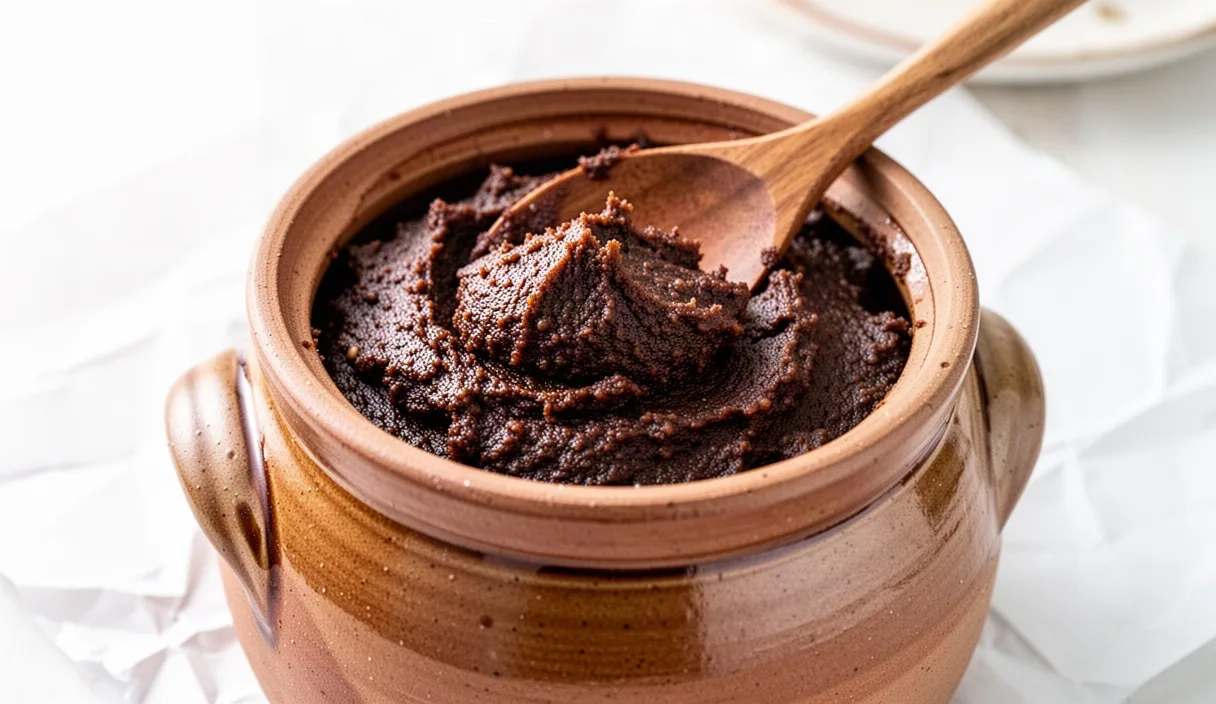
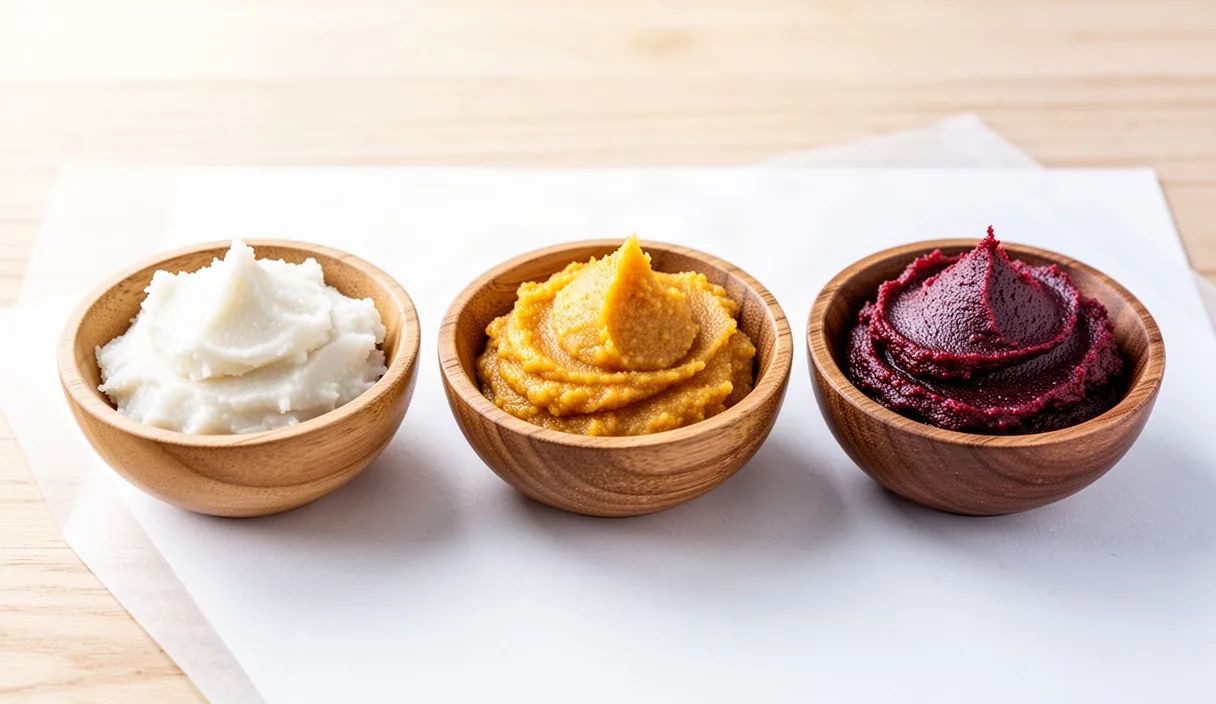
Walk down the refrigerated aisle of any Japanese grocery store, and you will see shelves packed with plastic tubs of miso in shades ranging from pale straw to deep mahogany. If you open them, the pale pastes smell sweet and faintly yeasty, like bread dough rising on a kitchen counter, while the dark pastes smell earthy, salty, and sharp, closer to roasted coffee or aged cheese. Many home cooks assume that these colors come from different varieties of soybeans, or perhaps from artificial food colorings added during packaging. In reality, the base ingredients are almost identical across the entire spectrum: cooked soybeans, water, salt, and a grain inoculated with fermentation mold called koji.
Why do these tubs look and taste so remarkably different if they start with the same basic pantry staples? The answer lies in time, heat, and the proportion of grain to legume. Miso is a living food governed by biochemical transformations that take anywhere from three weeks to three years to complete. When you understand how fermentation duration and grain choice shift the chemistry inside the tub, choosing between white, yellow, and red miso stops being a guessing game. You can select the precise tub that balances your soup, tenderizes your meat, or creates a caramelized glaze on roasted vegetables.
What Determines the Color of Miso
What causes a paste made from pale beans to turn as dark as chocolate over time? The primary chemical engine behind miso color is the Maillard reaction. This is the exact same chemical process that turns bread crust golden brown in an oven or sears a steak in a hot skillet: amino acids from protein react with simple sugars under ambient heat. While baking a loaf of bread forces this reaction to happen in forty minutes at high temperatures, miso undergoes the Maillard reaction over months or years at room temperature. As proteins and carbohydrates break down slowly inside the crock, they recombine into complex pigment molecules called melanoidins, which steadily darken the mixture from cream to gold, then to amber, and finally to deep brown or crimson.
Soybean preparation also dictates the baseline color before fermentation even begins. For pale pastes, manufacturers typically boil the soybeans in water. Boiling leaches out water-soluble sugars and naturally occurring pigments, leaving behind a pale bean with less fuel for rapid browning. For dark pastes, producers steam the soybeans instead. Steaming traps all the natural sugars, amino acids, and minerals inside the bean tissue. When those nutrient-dense, steamed beans enter the fermentation vat, they already possess a light tan hue and a concentrated pool of reactive compounds that darken rapidly once the koji enzymes begin breaking them apart.
Salt concentration controls the speed of these chemical shifts. Salt acts like a brake pedal on microbial life. A batch with a low salt concentration of five to seven percent allows enzymes and yeast to work quickly, maturing the paste in just three to eight weeks before dark melanoidins have time to accumulate. By contrast, a batch with twelve to fourteen percent salt slows microbial metabolism to a crawl. This heavy salinity allows the paste to age safely for two or three summers without spoiling, giving the slow-burning Maillard reaction plenty of time to turn the paste deep red or black.
Grain Ratios: Soybeans Against Rice and Barley
What is koji, and why does it change the character of the paste so drastically? Koji is cooked grain, usually white rice, barley, or whole soybeans, that has been inoculated with a filamentous fungus called Aspergillus oryzae. As this mold grows across the grain, it produces two critical enzymes: amylase, which chops complex starches into sweet glucose, and protease, which cuts heavy proteins into savory amino acids like glutamate. The ratio between this grain koji and the cooked soybeans determines whether a miso tastes mild and sugary or salty and deeply savory.
In traditional Japanese brewing, this relationship is measured by the koji ratio, known as koji-buai. This metric compares the weight of koji grain to the weight of soybeans. When a brewer uses a high koji ratio, say two parts rice koji to one part soybeans, the amylase enzymes dominate. They generate an abundance of simple sugars, producing a light, sweet paste commonly called shiro (white) miso. When a brewer flips that balance, using one part koji to two parts soybeans, the protease enzymes dominate. The proteins outnumber the starches, resulting in high concentrations of savory glutamate and a robust profile typical of aka (red) miso.
| Miso Style | Primary Koji Grain | Aging Duration | Salt Level | Flavor Profile |
|---|---|---|---|---|
| White (Shiro) | White Rice | 3 to 8 weeks | 5% to 7% | Sweet, mild, gentle acidity |
| Yellow (Shinshu) | Barley or Rice | 2 to 6 months | 8% to 11% | Balanced, nutty, mild earthiness |
| Red (Aka) | Soybean or Rice | 1 to 3 years | 12% to 14% | Robust, deeply savory, pungent |
The type of grain matters just as much as the amount. Rice koji produces a smooth, clean sweetness that dissolves evenly across the tongue. Barley koji, used to make mugi miso, imparts a rustic, malty aroma with a faint mineral bitterness that holds up well against oily fish and root crops. Pure soybean koji, used in central Japan to produce pure hatcho miso, contains almost no grain starch at all. It relies entirely on legume protein, resulting in an ink-dark paste with a sharp, cocoa-like bitterness and massive levels of savory intensity.
White Miso for Glazes and Delicate Broths
How does the kitchen behavior of white miso differ from its darker counterparts? Because white miso contains high levels of simple sugars and low salt, it functions more like a seasoning paste and less like a heavy umami concentrate. If you taste it directly from the container, it feels smooth, creamy, and gentle, reminiscent of cultured butter whipped with roasted nuts. These physical qualities make it ideal for quick cooking where you want flavor integration without overpowering mild ingredients.
White miso shines when used in marinades and glazes that meet direct, dry heat. Consider the classic preparation for broiled fish or eggplant, known as misoyaki. The simple sugars in the paste caramelize quickly under a broiler or over charcoal, creating a blistered, golden crust before the interior of the protein overcooks. To build a standard glaze, whisk together:
- Three tablespoons of white miso paste
- Two tablespoons of sweet rice wine (mirin)
- One tablespoon of traditional sake
- One teaspoon of unrefined cane sugar
Brush this mixture over black cod, salmon fillets, or split Japanese eggplants, let it sit for twenty minutes, then broil four inches from the heat source for six to eight minutes. The high sugar content browns rapidly, producing a fragrant, savory crust with gentle caramel notes that do not mask the sweet flake of fresh seafood.
In soups, white miso belongs in spring and summer broths. It pairs naturally with sweet vegetables like sweet corn, baby spinach, new potatoes, and soft tofu. Because its delicate aromatics are fragile, you should never allow a broth containing white miso to boil vigorously. High heat drives off the volatile esters produced during its short fermentation, leaving the soup tasting flat and chalky instead of floral and fresh.
Red Miso for Hearty Braises and Stews
Why do dark pastes behave so differently in long-cooked dishes? Red miso has already spent months or years enduring enzymatic breakdown and oxidative browning. Its sugars have largely bonded into stable melanoidin pigments, and its proteins have split into dense chains of savory peptides. As a result, red miso can withstand sustained heat without losing its aromatic identity. Where white miso fades and turns bitter after twenty minutes of simmering, red miso actually blooms, melding with animal fats and gelatin to form a cohesive, rich sauce.
In slow cooking, red miso functions like a natural bouillon paste packed with savory depth. When making a winter braise with pork shoulder, beef shank, or hearty root vegetables like burdock root, daikon radish, and lotus root, red miso provides an anchor that cuts through heavy grease. It contains natural organic acids, mainly lactic acid, that act as a subtle counterbalance to rich meats, much like a splash of red wine or tomato paste in a European ragout.
For a traditional pork and root vegetable soup, known as tonjiru, red miso is the standard choice. You can construct a deeply satisfying pot using this reliable cooking sequence:
- Brown thinly sliced pork belly in a heavy-bottomed pot over medium heat until the fat renders.
- Add diced burdock root, carrots, and shiitake mushrooms, stirring for five minutes so the vegetables coat in the rendered pork fat.
- Pour in six cups of kelp and bonito stock (dashi), bring to a gentle simmer, and cook until the roots soften, roughly fifteen minutes.
- Dissolve three tablespoons of red miso paste directly into a ladle of the hot broth using a small whisk, then stir the slurry back into the pot.
- Remove from the burner immediately after the paste integrates to preserve its woodsy, fermented aroma.
Red miso also excels in rich dipping sauces for skewered meats, cold weather hot pots, and thick dressings for bitter leafy greens like mustard greens or dandelion. Its dominant profile balances pungent aromatics like raw garlic, grated ginger, and toasted sesame oil without disappearing into the background.
Proper Storage to Prevent Premature Oxidation
What happens to miso once you crack the plastic seal on a new container? Miso is packed with live enzymes and beneficial microbes, which means its biochemical journey does not stop when it reaches your refrigerator. When exposed to ambient oxygen, the surface of the paste begins to oxidize. This atmospheric oxidation is different from controlled anaerobic fermentation; it turns pale miso a dull, unappealing gray-brown and can produce stale, cardboard-like off-flavors on the exposed top layer.
To keep your paste tasting as fresh as the day you bought it, you must control three environmental factors: air, temperature, and moisture. Follow these steps to secure the container after every single use:
- Smooth the top surface: Take a clean silicone spatula and press the remaining miso flat inside the container, eliminating air pockets and valleys along the sides of the tub.
- Apply a direct barrier: Cut a small square of parchment paper or plastic cling wrap slightly larger than the diameter of the tub. Press this sheet directly against the smooth surface of the paste, smoothing out all trapped air bubbles. Many commercially packaged tubs include a small square of white parchment for this exact purpose; do not throw it away.
- Seal the outer lid: Snap the plastic lid securely over the container to keep exterior refrigerator odors from permeating the tub.
- Select cold storage: Keep the tub in the coldest part of your refrigerator, usually the bottom shelf near the back wall, rather than in the door bins where temperature swings occur throughout the day.
Can you freeze miso for long-term storage? Yes, and it is often the best option for households that cook with paste infrequently. Because miso contains high concentrations of natural salts, its freezing point drops far below the zero-degree Celsius baseline of home freezers. A standard tub kept in a freezer at minus eighteen degrees Celsius will not turn into a solid block of ice. Instead, it maintains a dense, scoopable consistency similar to cold fudge. You can dip a clean spoon into the frozen tub, extract two tablespoons for a dinner sauce, and return the container immediately to the freezer drawer without needing to thaw the batch.
Common Mistakes to Avoid
The most frequent error home cooks make is adding miso directly to a rolling boil. Boiling temperatures destroy the delicate aromatic compounds and kill the beneficial live enzymes that give the paste its digestive benefits. Always dissolve your miso at the very end of the cooking process. Turn off the burner, transfer a ladle of warm broth out of the pot, whisk the paste into the liquid until smooth, and stir the mixture back into the pot.
Another common mistake is treating white and red varieties as interchangeable 1:1 substitutes. Because red miso contains roughly double the sodium content and far higher glutamate density than sweet white miso, swapping it into a light soup recipe will overwhelm the dish, making it unpleasantly salty and dark. If a recipe calls for white miso and you only possess red, cut the measurement by half and add a splash of mirin or a small pinch of sugar to restore the intended flavor balance.
Finally, cooks frequently contaminate their storage tubs by using wet or dirty utensils. Introducing water droplets or crumbs from other foods into the container creates pockets of localized moisture where rogue molds can take root, ruining an entire tub of fermented paste that otherwise would have lasted for twelve to eighteen months.
Putting Your Knowledge to Work
Understanding miso varieties allows you to approach savory seasoning with the same confidence that a baker brings to flours or a winemaker brings to grape varieties. If your pantry currently lacks this staple, purchase two small tubs on your next shopping trip: one tub of sweet white (shiro) miso and one tub of medium-aged yellow (shinshu) or red (aka) miso. Taste a quarter teaspoon of each paste side by side on a clean spoon. Notice the immediate rush of natural sweetness and soft acidity in the white variety, then contrast it against the lingering, mouth-coating savoriness and salt punch of the darker paste.
Begin by using the white paste as an emulsifier in simple weekday cooking: whisk a tablespoon into your next batch of Dijon mustard salad dressing, or blend it with softened unsalted butter to melt over ears of grilled sweet corn. Use the dark paste whenever you simmer lentils, braise beef short ribs, or build an autumn stew with wild mushrooms. If you manage specific dietary concerns such as soy allergies or sodium restrictions, consult a registered dietitian or certified medical provider to find suitable grain-only alternatives, like chickpea or barley pastes, that fit your personal nutritional plan. With basic storage precautions and an understanding of fermentation time, these versatile tubs will serve as reliable foundations for your daily cooking for months to come.