Have you ever simmered a pot of beef or root vegetables for two hours, only to find the broth tastes thin and separated? You smell the meat and you taste the salt, yet the liquid rolls off your tongue like tinted water instead of coating your mouth. Many home cooks try to fix this by boiling the pot furiously to cook off the liquid, or by stirring in spoons of cornstarch at the very end. While starch thickens liquid, it does not add depth, and heavy reductions can leave the dish uncomfortably greasy.
This is where fermented bean pastes change the entire structure of a braise. When you introduce a spoonful of aged legume paste into warm cooking liquid, you are not just adding a seasoning. You are adding billions of broken-down proteins, suspended vegetable solids, and natural emulsifiers created through months of microbial activity. The paste acts as both a flavor foundation and a physical bridge, binding water and fat into a cohesive sauce that clings to every chunk of meat and potato.
The Fermentation Journey of Legumes
What happens to a simple soybean or fava bean during fermentation? Raw beans are dense packages of starch, complex proteins, and moisture. Left alone in a damp room, they spoil. But when humans introduce beneficial molds, primarily Aspergillus oryzae or wild airborne fungi, alongside a calculated amount of salt, the beans embark on a controlled breakdown that lasts anywhere from three months to eight years.
The mold produces enzymes called proteases and amylases. Proteases act like microscopic kitchen shears: they snip long, flavorless protein chains into small fragments called amino acids. The most famous of these amino acids is glutamic acid, which triggers the savory sensation we call umami. At the same time, amylases snip long carbohydrate chains into simple sugars, which provide a faint background sweetness. Think of it like composting in a garden: complex, tough yard waste slowly turns into dark, crumbly, nutrient-dense soil. In the fermentation crock, the tough bean softens into a dark, savory paste packed with free amino acids.
This biological transformation also creates physical grit and microscopic particles. Unlike pure table salt or clear soy sauce, fermented bean paste contains tiny cell wall fragments, known as insoluble fibers, that survive the enzymatic breakdown. When these particles disperse into a braising broth, they alter how light hits the dish and how the sauce behaves on the palate. The liquid turns opaque and takes on a velvety body that clear broths can never achieve on their own.
A standard fermentation schedule for cooking pastes balances time, salt levels, and warmth:
- Inoculation: Cooked beans are mixed with grain flour and mold spores, then rested for 48 to 72 hours at roughly 30 degrees Celsius until a pale blanket of mycelium forms.
- Brining: The molded beans are mixed with coarse salt (typically 11 to 14 percent of total weight) and water to prevent putrefying bacteria from growing.
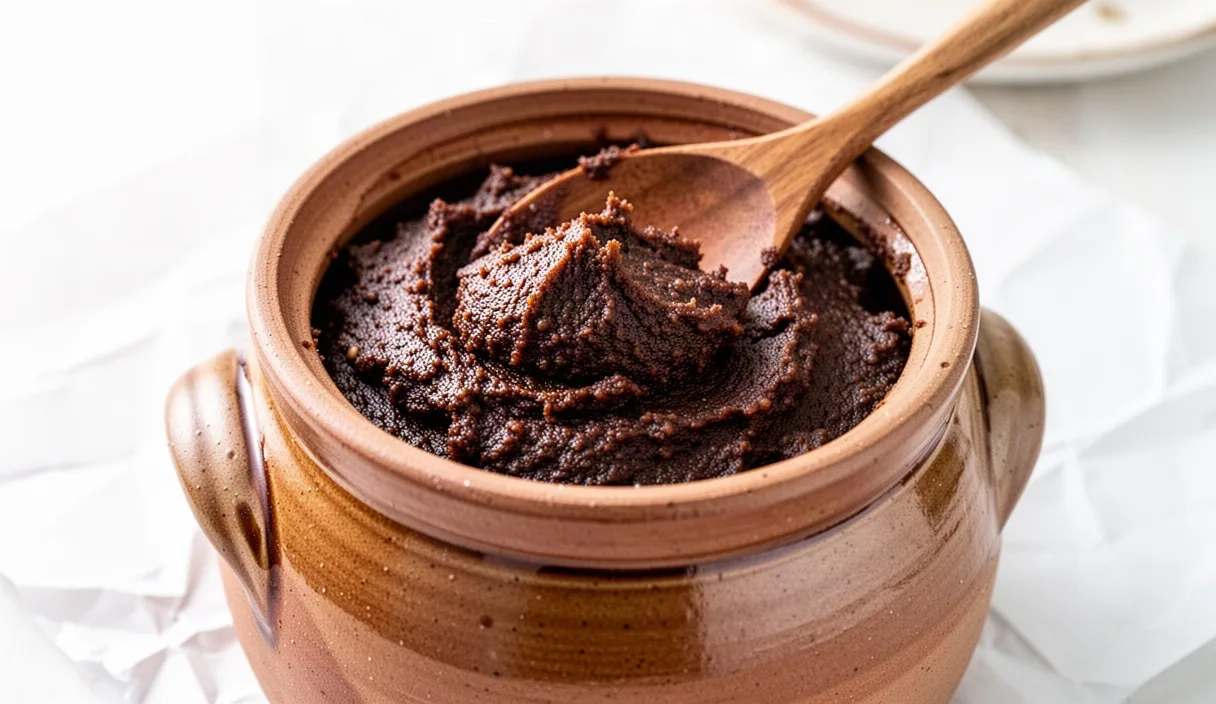
- Aging: The mixture sits in earthenware jars under the sun or in temperature-controlled rooms. Over 90 to 700 days, the enzymes work slowly, turning the mixture from pale tan to deep brick red or chocolate brown.
Frying Paste in Fat Before Pouring Water
Why should you never drop raw bean paste directly into simmering water? If you stir cold paste into hot broth, the paste will dissolve, but it will keep its raw, sharp, and sometimes muddy cellar aroma. Fermentation produces volatile organic compounds, including sulfur compounds, raw alcohols, and sour organic acids. If you do not cook those raw notes out first, they stay trapped in the steam of your stew.
The solution is an old kitchen technique: blooming the paste in oil before adding any liquid. Pour two tablespoons of cooking oil into your pot, set the flame to medium-low, and drop in your paste. As the paste hits the hot fat, the water inside its particles begins to sizzice away. This allows the temperature of the paste itself to rise past the boiling point of water, reaching the 140 to 165 degrees Celsius range where the Maillard reaction occurs.
During this brief frying period, which takes between two and four minutes, three distinct transformations happen:
- Aroma modification: Harsh, fermented alcohol notes evaporate into the air, replaced by nutty, roasted, and caramelized scents.
- Pigment release: Fat-soluble color compounds, especially the red carotenoids from chili peppers in pastes like doubanjiang, dissolve into the oil, turning the fat a brilliant ruby shade.
- Particle coating: The oil coats the tiny bean fragments, preparing them to form an emulsion later when liquid is introduced.
Watch the pot closely while frying. Because bean paste contains both residual sugars and proteins, it burns easily. If the heat is too high, the paste turns black and bitter in under thirty seconds. Keep your spatula moving across the bottom of the pan, scraping the paste until the oil turns translucent red or deep amber, and tiny bubbles foam around the paste edges. Only then should you splash in your stock, wine, or water.
How Paste Thickness Replaces Reduction Sauces
In classic European cooking, a rich sauce often demands hours of slow simmering to reduce stock, or the addition of a gelatin-heavy bone broth combined with a flour roux. While this produces a glossy finish, it requires extra pans, precise butter temperatures, and considerable time. Fermented bean paste achieves a similar mouth-coating thickness through a completely different physical mechanism.
Consider what happens when you whisk fine sand into water versus when you stir flour into water. Sand sinks, while flour dissolves or clumps. Fermented bean paste contains millions of microscopic, partially digested plant cells that neither dissolve completely nor sink rapidly to the bottom. Instead, they remain suspended in the hot water. Food scientists call this a colloidal suspension. These suspended particles get in the way of the water molecules, slowing down their movement and creating physical resistance when the liquid rolls over your tongue.
Furthermore, bean pastes are rich in natural soy lecithin and proteins that have both water-loving (hydrophilic) and fat-loving (lipophilic) sections. When you cook a fatty cut of pork belly or beef chuck in water alone, the rendered fat floats to the surface in an unappealing yellow puddle. But when bean paste is present, its proteins grab onto the droplets of rendered fat with one end and bind to the water with the other end. This creates a stable emulsion, locking the rich animal fat into the body of the sauce.
The result is a braising liquid that feels thick, creamy, and clinging without a single gram of dairy cream, butter, or added starch. A stew made with two tablespoons of paste per liter of water will coat the back of a spoon after just 35 minutes of gentle simmering, saving you an hour of aggressive reduction time while keeping the meat juicy rather than dried out from excessive boiling.
Balancing Natural Salt with Sweet Ingredients
Fermented bean pastes are intensely salty. Most commercial and artisanal varieties contain between 10 and 15 grams of sodium per 100 grams of product. If you add bean paste to a pot that has already been seasoned with table salt, chicken bouillon cubes, or light soy sauce, the dish quickly becomes unpalatable. How do you handle this high sodium level without muting the paste's complex flavors?
The secret lies in balancing the salt with specific types of sweet and acidic ingredients rather than simply diluting the pot with more water. Adding plain water only weakens the body and umami of your braise. Instead, professional cooks pair salty pastes with sweet root vegetables, unrefined sugars, or fermented rice liquids. The sweetness suppresses our perception of harsh saltiness on the tongue, allowing the savory, roasted notes of the beans to step forward.
Here are three reliable ways to counterbalance the salt in a paste-heavy braise:
- Caramelized Alliums: Cook diced yellow onions or leeks in the pot until they turn golden brown before adding the paste. As onions cook down, their long-chain fructans break down into sweet fructose, which softens the sharp edges of salty pastes.
- Fermented Rice Liquids: Ingredients like mirin, Chinese shaoxing wine, or Korean cooking wine contain both subtle sweetness and aromatic alcohols. Adding 45 milliliters of mirin for every 30 grams of dark bean paste rounds out the sharp salinity while adding a glossy shine to the sauce.
- Sweet Starchy Vegetables: Chunks of daikon radish, kabocha squash, or carrots act like flavor sponges. As they simmer, they absorb the salty broth while releasing their internal sugars into the sauce, creating a balanced equilibrium across the entire pot.
Always hold back any supplementary salt until the braise is finished. After the meat is tender and the vegetables are cooked through, taste the sauce. In almost every case, the bean paste combined with the natural mineral content of the meat will provide all the sodium the dish requires.
Comparing Korean Doenjang to Chinese Doubanjiang
While both are staples made from fermented beans, Korean doenjang and Chinese doubanjiang behave differently in the pot. Using one in place of the other without adjusting your cooking method will fundamentally alter the texture, color, and aroma of your braise. Understanding how they differ allows you to choose the exact tool for the flavor profile you want.
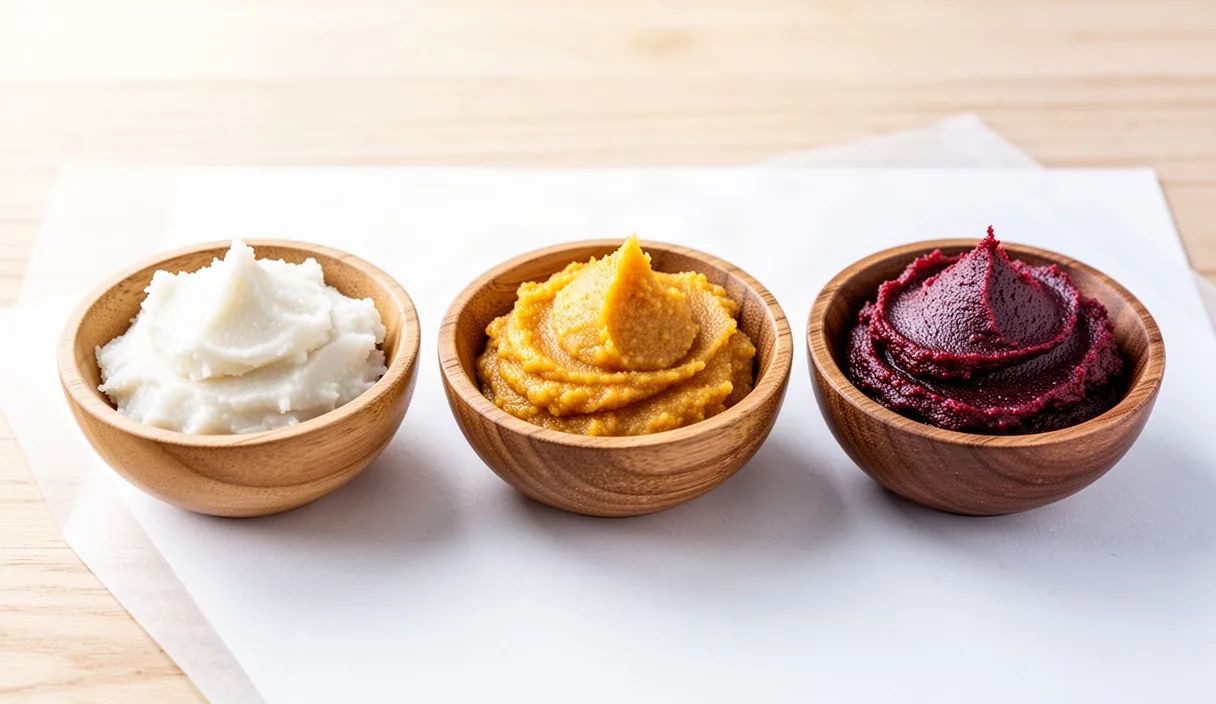
Doenjang is made strictly from soybeans and brine, dried and aged without added starches or chili peppers. It has a pungent, earthy, deeply savory profile reminiscent of aged blue cheese or cured ham. Chinese Pixian doubanjiang, by contrast, relies on broad beans (fava beans) mixed with fresh red erjingtiao chilies, wheat flour, and salt. It is spicy, fruity, and distinctly red, with a sharp, tingling heat that cuts through heavy meats.
| Feature | Korean Doenjang | Chinese Pixian Doubanjiang |
|---|---|---|
| Primary Legume | Soybeans | Broad beans (Fava beans) |
| Secondary Ingredients | Salt, water (sometimes grain koji) | Fresh red chilies, wheat flour, salt |
| Color and Texture | Light tan to dark muddy brown; thick and chunky | Deep mahogany red; coarse with visible bean and chili skins |
| Dominant Flavor Profile | Earthy, barnyard, deep umami, nutty, savory | Pungent, spicy, fermented chili fruitiness, sharp savory |
| Best Braising Partners | Pork shoulder, short ribs, zucchini, firm tofu, clams | Beef shin, fatty pork belly, eggplant, whole river fish |
| Technique Requirement | Can be dissolved near middle of cooking; resists long boiling | Must be minced fine and fried in oil at the start of cooking |
Notice the functional difference in the kitchen. Doenjang contains delicate volatile aromas that can soften if boiled aggressively for hours; many Korean cooks add half the paste early to flavor the meat, and the remaining half during the final fifteen minutes of simmering to preserve its fresh, earthy punch. Doubanjiang, on the other hand, contains raw chili skins and coarse broad bean husks. If you drop doubanjiang straight into a simmering stew, those skins remain leathery and tough. You must mince doubanjiang finely on your cutting board before tossing it into hot fat to soften the skins and release its signature red chili oil.
Common Mistakes When Cooking With Bean Pastes
Even seasoned home cooks run into problems when working with these concentrated pastes. Here are four widespread errors and how to avoid them:
- Burning the paste during the initial fry: Bean pastes contain natural sugars and wheat starch that char rapidly. Always keep the heat at medium-low and stir constantly. If the paste blackens, discard it and start over; burnt fermented beans impart an acrid, ashy flavor that permeates the entire dish.
- Adding paste too late to thick braises: If you wait until the last five minutes of cooking to stir in a thick paste, the bean proteins will not have enough time to hydrate and emulsify the cooking oils. Give the paste at least twenty minutes in the simmering liquid to integrate with the fats and braising broth.
- Ignoring the chili skins in coarse pastes: Pixian doubanjiang contains broad bean hulls and chili skins. Failing to chop the paste finely before cooking results in fibrous, paper-like bits stuck between your teeth. Spend thirty seconds mincing the paste with a heavy knife before it touches the pan.
- Salting the raw meat before browning: When preparing meat for a bean paste braise, season the meat very lightly, or skip the salt entirely and use only black pepper. The paste carries enough concentrated sodium to season both the liquid and the interior of the meat as it braises.
Putting Fermented Paste to Work in Your Kitchen
To see the physical difference bean paste makes in a braise, start with a simple kitchen test. The next time you braise a kilogram of beef chuck or pork shoulder, split the preparation into two pots. In the first pot, use your standard broth, a pinch of salt, and your usual aromatics. In the second pot, eliminate the added salt and fry 35 grams of fermented bean paste in two tablespoons of oil until fragrant, then add your aromatics, meat, and water.
After ninety minutes of gentle simmering, observe the difference. The standard pot will show a clear broth with a floating pool of oil on top. The paste-enriched pot will show a deep, unified sauce where the oil and water remain suspended together, clinging to your spoon with a rich, velvety body. Once you understand how these ancient microbial ferments manipulate fat, liquid, and flavor, you will rely far less on cornstarch slurries and heavy flour roux to build unforgettable braised dishes.