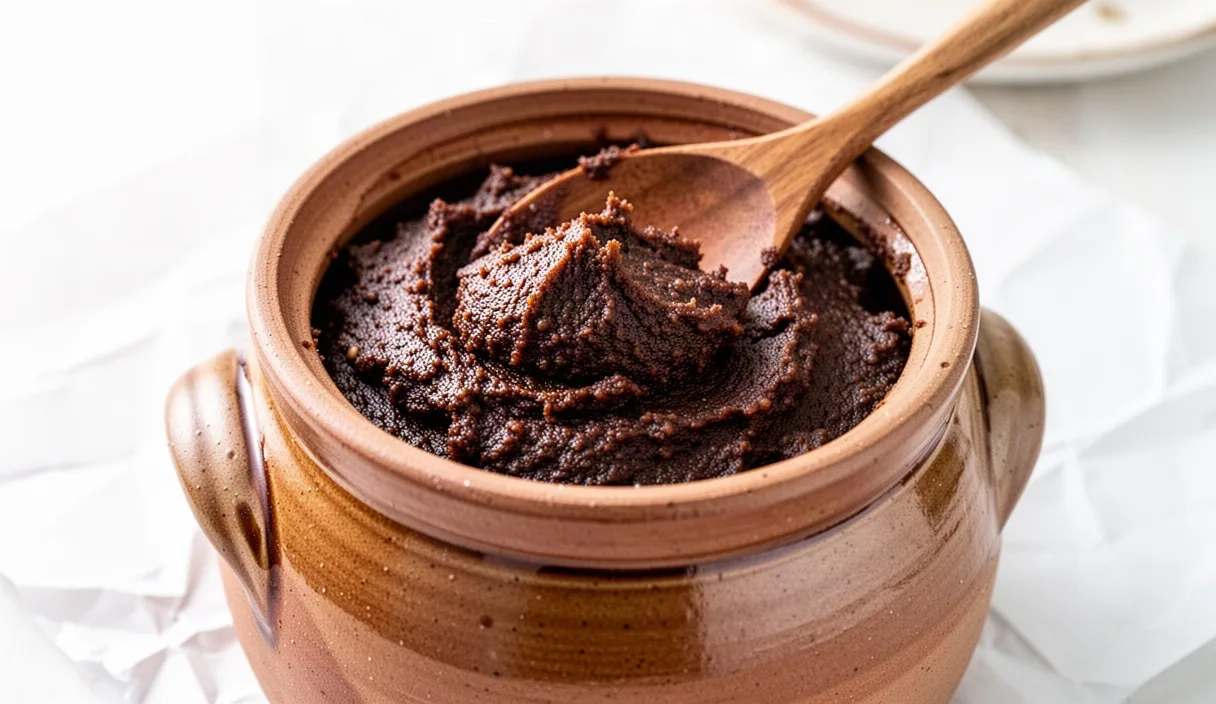
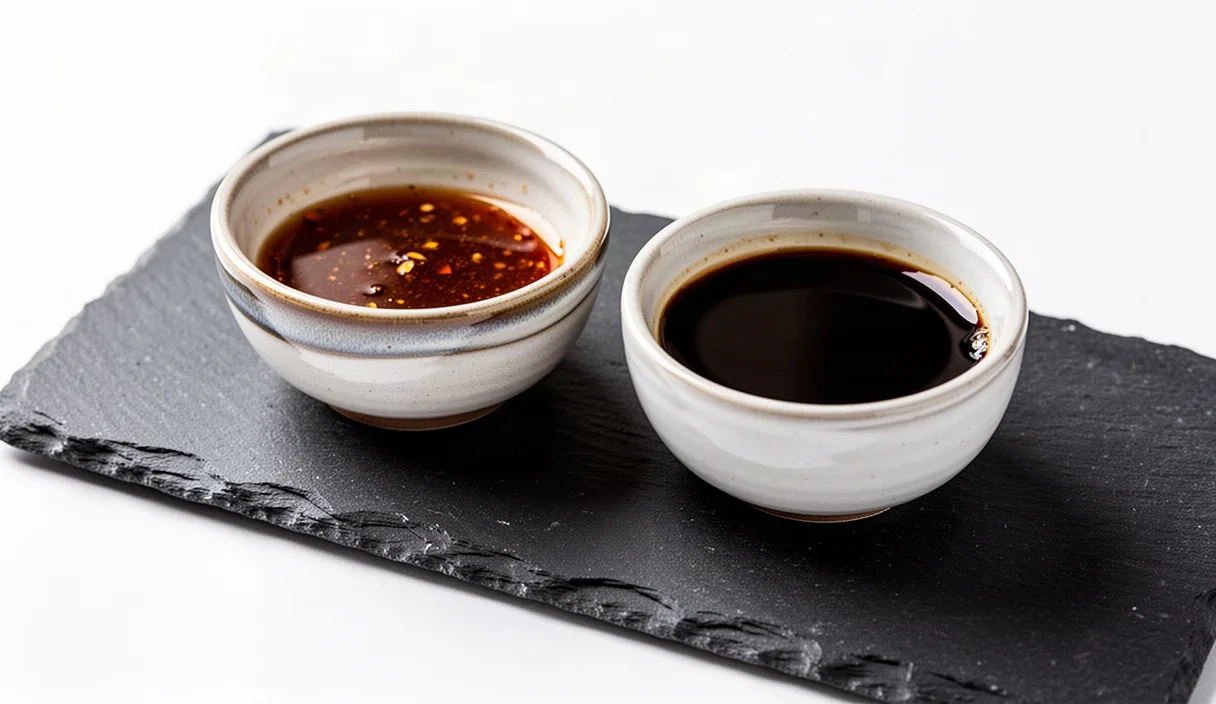
If you stand in front of an open pantry and uncork a bottle of fish sauce alongside a bottle of traditional soy sauce, your nose immediately detects two different worlds. One smells sharp, pungent, and briny, carrying the distinct aroma of the sea. The other smells warm, yeasty, and slightly sweet, reminiscent of toasted cereal and roasted malt. Despite these surface contrasts, both liquids perform the exact same culinary task: they deliver a heavy dose of dissolved salt alongside concentrated glutamic acid, the chemical compound responsible for savory flavor.
Why do these two dark pantry staples taste so different if their fundamental purpose is identical? The answer lies in the raw ingredients, the specific enzymes that break them down, and how high concentrations of sodium chloride interact with organic proteins over several months or years. Understanding the chemical differences between fish sauce and soy sauce allows a cook to stop relying on guesswork and start balancing salt, acidity, and savory depth with precision.
The Shared Microbiology of Salt and Time
How does raw fish or soaked grain sit in a wooden vat for a full year without turning into a toxic, rotten mess? The protective agent is salt. In culinary fermentation, high salt levels create an environment that kills off harmful putrefactive bacteria while allowing specialized enzymes and salt-tolerant microorganisms to dismantle complex proteins into basic building blocks. This process is called proteolysis. You can picture whole proteins as long, tightly coiled necklaces made of beads. Proteolysis is the steady action of microscopic scissors cutting the string, freeing the individual beads, which are amino acids.
Fish sauce relies heavily on autolysis, which means self-digestion. Manufacturers take small, oily fish, most commonly anchovies of the family Engraulidae, and mix them with sea salt in large wooden barrels or concrete tanks. The typical ratio is three parts fish to one part salt by weight, yielding an internal salt concentration of roughly 26% to 28%. At this salinity, pathogenic bacteria cannot survive. Instead, digestive enzymes naturally present in the internal organs of the fish, specifically pepsin, trypsin, and chymotrypsin, stay active. These enzymes slowly digest the fish flesh from within. Extremely salt-tolerant bacteria, known as halophiles, such as species of Halococcus and Tetragenococcus, assist by breaking down fatty acids and creating secondary aroma molecules over six to twelve months.
Soy sauce, on the other hand, requires a two-stage fermentation because cooked soybeans do not possess the internal digestive enzymes found in animal guts. First, mold must do the initial work. Cultivators steam soybeans and roast crushed wheat, then inoculate the mixture with spores of the mold Aspergillus oryzae or Aspergillus sojae. This mold-covered grain is called koji. Over three days in a climate-controlled room, the mold secretes abundant proteolytic and amylolytic enzymes to digest the bean protein and wheat starch.
Next comes the brine stage. The koji is submerged in an 18% to 22% salt-water solution to create a mash called moromi. The high salt halts the growth of the mold, but its enzymes remain active in the brine. Over the next four to eight months, salt-tolerant lactic acid bacteria (Tetragenococcus halophilus) and specialized yeasts (Zygosaccharomyces rouxii) take over. The bacteria produce lactic acid, which drops the pH and gives soy sauce its slight tang, while the yeasts ferment the wheat sugars into alcohol and aromatic esters.
| Fermentation Trait | Traditional Fish Sauce | Brewed Soy Sauce (Koikuchi) |
|---|---|---|
| Primary Protein | Whole wild anchovies or mackerel | Soybeans (often with equal roasted wheat) |
| Key Enzyme Source | Endogenous fish digestive organs | Aspergillus oryzae mold (koji) |
| Microbial Helpers | Halophilic marine bacteria | Lactic acid bacteria and osmophilic yeast |
| Typical Salinity | 24% to 28% | 14% to 18% |
| Standard Aging Window | 9 to 18 months | 6 to 12 months |
How Protein Sources Dictate Base Notes
While both liquids end up rich in glutamates, the original protein source completely changes the sensory profile. Fish tissue contains high levels of sulfur-containing amino acids, connective tissues, and marine fats. When fish sauce ferments, lipid oxidation breaks down those fats into short-chain fatty acids like butyric acid and isovaleric acid. At the same time, volatile nitrogen compounds like trimethylamine and ammonia develop. In high amounts, these chemicals smell pungent, but in balanced amounts, they provide the unmistakable savory bass note that defines Southeast Asian cookery.
Soybeans are oilseeds packed with vegetable globulins, but traditional soy sauce also includes roasted wheat. Why does wheat matter so much in a savory sauce? Wheat supplies carbohydrates, specifically starches that break down into simple sugars during fermentation. When these sugars combine with amino acids in the presence of mild warmth, a natural browning reaction occurs, known as the Maillard reaction. This reaction generates hundreds of aroma compounds called furans, pyrazines, and maltol. These compounds explain why soy sauce smells like baked bread, roasted coffee, and caramel, notes that are entirely absent in pure fish sauce.
Another major difference lies in flavor synergy. Human taste buds register savoriness through the T1R1 and T1R3 taste receptor proteins. Free glutamic acid activates this receptor. However, when an inosine monophosphate (IMP) molecule binds alongside glutamate, the receptor changes shape and stays triggered for longer. Fish sauce contains naturally occurring IMP derived from the muscle tissue of the fish. Soy sauce, being plant-based, contains virtually no IMP, though it does contain small traces of guanosine monophosphate (GMP). This structural difference means fish sauce often registers as a sharper, more punchy savoriness on the tongue, while soy sauce feels rounder, sweeter, and more diffuse.
Measuring Salt Ratios in the Pan
A common error when cooking with these liquids is treating them as direct, equal measures of seasoning. They contain substantially different quantities of dissolved sodium. Because fish sauce ferments with pure salt and animal flesh without water dilution, it is almost always significantly saltier by volume than standard soy sauce.
A standard 15-milliliter tablespoon of regular fish sauce contains between 1,420 milligrams and 1,750 milligrams of sodium. By comparison, a 15-milliliter tablespoon of standard dark-brewed Japanese soy sauce (koikuchi) contains between 920 milligrams and 1,020 milligrams of sodium. Chinese light soy sauce (sheng chou), which is formulated to be saltier than regular dark soy sauce, hovers around 1,150 milligrams of sodium per tablespoon. If a recipe calls for soy sauce and you dump in the exact same volume of fish sauce, your dish will end up roughly 45% saltier than intended.
- Fish sauce baseline: Roughly 25% dissolved mineral salt by weight. One teaspoon (5 ml) provides approximately 500 mg of sodium.
- Chinese light soy sauce: Roughly 18% dissolved mineral salt by weight. One teaspoon (5 ml) provides approximately 380 mg of sodium.
- Japanese brewed soy sauce: Roughly 15% dissolved mineral salt by weight. One teaspoon (5 ml) provides approximately 320 mg of sodium.
- Tamari (wheat-free soy sauce): Roughly 16% dissolved mineral salt by weight. One teaspoon (5 ml) provides approximately 340 mg of sodium.
When you need to adjust salt levels in a dish, keep these numbers in mind. If you are building a pan sauce and want to deliver 1,000 milligrams of sodium, you need either 9 milliliters of fish sauce or roughly 15 milliliters of standard soy sauce. Choosing fish sauce will give you that target saltiness with less total liquid volume, which helps when you want to avoid making a sautéed dish soggy.
When to Substitute One for the Other
Can you swap fish sauce and soy sauce when you run out of one? Yes, but you must make calculated adjustments to compensate for differences in sugar content, salt density, and aroma. You cannot perform a simple one-to-one swap without altering the final profile of your food.
Swapping Fish Sauce in Place of Soy Sauce
If a recipe calls for soy sauce and your shelf only holds fish sauce, you must reduce the liquid volume and introduce a small amount of sweetness. Because fish sauce lacks the malted wheat sugars of soy sauce, its flavor can taste thin and excessively sharp in dishes built around soy sauce, such as a Japanese teriyaki glaze or a Northern Chinese braise.
- Reduce the volume: For every 15 milliliters (one tablespoon) of soy sauce requested, use 10 milliliters (two teaspoons) of fish sauce.
- Add water: Add 5 milliliters (one teaspoon) of water to restore the expected liquid volume without adding extra salt.
- Add sweetness: Stir in 1 gram (roughly a quarter-teaspoon) of white sugar, honey, or mirin to mimic the residual maltose from fermented wheat.
Swapping Soy Sauce in Place of Fish Sauce
Replacing fish sauce with soy sauce is trickier because soy sauce cannot replicate the briny, marine depth that defines dishes like Vietnamese dipping sauce (nuoc cham) or Thai green curry. However, you can achieve a workable substitute by increasing the volume and adding an acidic or oceanic element.
- Increase the volume: For every 10 milliliters (two teaspoons) of fish sauce requested, use 15 milliliters (one tablespoon) of light soy sauce.
- Introduce acidity: Add 2 to 3 drops of fresh lime juice or rice vinegar to simulate the sharp tang of fish sauce.
- Optional marine boost: If your dietary restrictions allow it, dissolve a quarter of a minced anchovy fillet or a pinch of dried shrimp powder into the soy sauce to supply the missing inosine monophosphate.
When to Avoid Substitution Altogether
Do not substitute fish sauce into delicate, pale dishes where you want no trace of animal pungency, such as a mild Japanese egg custard (chawanmushi) or clear vegetable noodle broths. Conversely, do not substitute dark, sweet soy sauces into fresh Southeast Asian salads, like a green papaya salad (som tum). The heavy caramel notes and dark coloring of soy sauce will overwhelm the crisp lime and chili balance.
Adding Savory Liquids at the Right Cooking Stage
How heat affects these liquids depends entirely on their molecular make-up. Many cooks treat seasoned sauces as static liquids that taste the same whether they spend thirty seconds or thirty minutes in the pan. In reality, heat drives off volatile aromas and changes how our tongues perceive salt and glutamates.
At the Start: Long Simmers and Braises
If you are making a slow-cooked beef stew, a tomato-based ragù, or a long-simmered poultry broth, add fish sauce during the initial browning or liquid-reduction phase. When fish sauce cooks at a low simmer for forty minutes or longer, heat drives away the pungent volatile amines, including trimethylamine, through steam evaporation. What remains behind is pure, deep glutamic acid and mineral salt. The final stew will have zero fish flavor, but it will boast a savory backbone that salt alone cannot provide.
In the Middle: High-Heat Wok Searing
Soy sauce excels in high-heat stir-frying, but technique matters. Instead of pouring soy sauce directly over cold vegetables or noodles in the center of the pan, splash it against the bare, searing metal of the wok's perimeter. This technique is called splashing the wok (guobian). The high temperature, often exceeding 180 degrees Celsius, instantly boils off water and vaporizes the sugars and amino acids, creating microscopic scorched droplets. This flash-caramelization produces the complex, smoky aroma known in Cantonese cooking as wok hei. If you attempt this with fish sauce, the high dry heat can turn the fish oils acrid and bitter, so keep fish sauce closer to the cooler ingredients in the center.
At the End: Off-Heat Finishing
Raw, unheated applications preserve the delicate aromatic fractions that microorganisms spent months building. In fresh dipping sauces, dressings, and table condiments, both liquids should be used unheated. Raw soy sauce retains subtle alcohol esters, yeast aromatics, and crisp acidity that break down under heat. Raw fish sauce retains its vibrant marine funk, sharp punch, and intense clarity, making it ideal for cutting through rich grilled pork or fried spring rolls alongside lime juice, garlic, and sliced bird's eye chilies.
Common Mistakes with Fermented Liquids
Even experienced home cooks run into trouble with fish sauce and soy sauce when they overlook basic storage rules and physical chemistry. Watch out for these four frequent missteps:
- Over-reducing pan sauces without adjusting salt: Salt does not evaporate. If you make a pan sauce using 30 milliliters of soy sauce and reduce the liquid by half, the salt concentration jumps from roughly 15% to nearly 30%. Always use low-sodium stocks when building pan reductions, and hold off on adding your fermented savory liquid until the final five minutes of simmering.
- Storing high-grade soy sauce in a warm pantry: While the salt prevents bacterial spoilage, soy sauce oxidizes rapidly when exposed to air and room temperature. Over two months, oxygen turns its ruby-red hue muddy brown and degrades delicate yeast esters into dull, bitter flavors. Keep naturally brewed soy sauce in the refrigerator once opened. Fish sauce, being heavily saturated with salt and low in delicate sugars, can safely stay in a dark pantry cupboard.
- Ignoring salt crystallization: If you notice small, clear, crunching pebbles at the bottom of an older bottle of fish sauce, do not discard it. Those are harmless sea salt crystals that have precipitated out of the liquid as ambient temperatures dropped. The sauce remains entirely safe to consume, though the remaining liquid may be marginally less salty.
- Assuming dark soy sauce equals stronger flavor: Chinese dark soy sauce (lao chou) looks thicker and blacker than light soy sauce, but it actually contains less salt and lower amounts of free glutamate. It has added molasses or caramel coloring and is designed primarily to tint braised meats a deep mahogany, not to provide the main hit of savory salt.
Next Steps in the Kitchen
The best way to understand how these liquids perform is to train your palate on their baseline properties outside of a complex recipe. Start with a straightforward dilution test on your counter.
Measure 50 milliliters of warm tap water into two small glasses. Add exactly 1 milliliter (about a quarter-teaspoon) of fish sauce to the first glass, and 1 milliliter of brewed soy sauce to the second. Stir both thoroughly. Take a sip of the warm fish sauce water first. Notice how the salt hits the sides of your tongue instantly, followed by a persistent savory hum at the back of your throat. Rinse your mouth with plain water, then taste the diluted soy sauce. Notice the softer, rounder salt profile, the bread-like aroma, and the faint sweet finish.
Once you recognize these baseline notes, try a cooking test. The next time you roast a batch of root vegetables or sear a skillet of mushrooms, divide the batch in half. Season one half with a measured teaspoon of soy sauce mixed with a drop of neutral oil. Season the other half with two-thirds of a teaspoon of fish sauce. Roast them side by side, taste the difference in caramelization and savory depth, and use those lessons to guide your hands whenever you reach into your pantry.