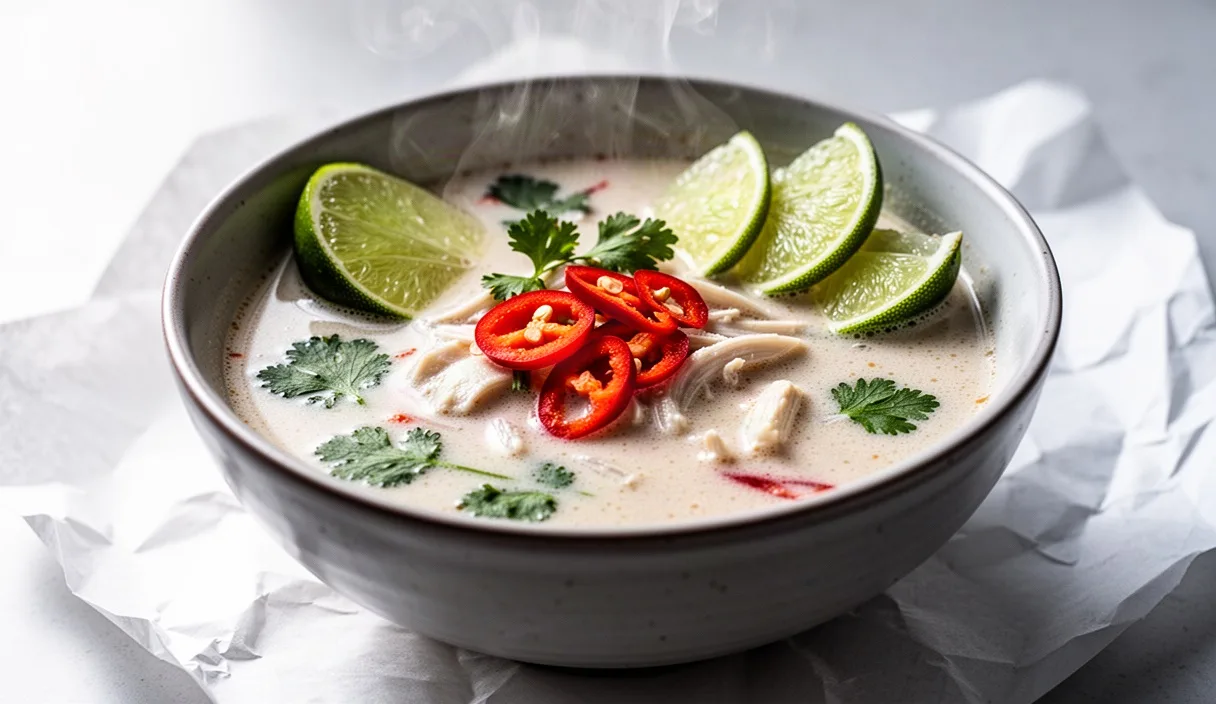
If you sit down at a sidewalk stall in Bangkok and order a bowl of tom yam or rich pork leg soup, the first thing you notice is the thin sheen of oil floating on the surface. That fat carries spice, garlic, and roasted shallots straight to your senses. Yet, after three or four spoonfuls, the dish does not feel greasy or cloying. It feels bright, sharp, and inviting. Why does a soup packed with pork belly or coconut cream taste so light on the palate?
The answer lies in how acid interacts with fat inside your mouth. Fat and oil provide richness, but they also create sensory fatigue by blanketing taste receptors. Street cooks in Thailand solved this problem centuries ago through precise additions of lime juice, fermented fruit pastes, and vinegar. By understanding the mechanical and chemical ways acid cuts through heavy broths, you can apply these same principles to any sauce, braise, or soup in your own kitchen.
How Fat Coats the Tongue During Chewing
What actually happens inside your mouth when you swallow a bite of fatty meat? Fats and oils are hydrophobic lipids, which means they do not mix with water. Human saliva is mostly water, containing about 99 percent liquid alongside enzymes and mineral salts. Because saliva and fat naturally repel one another, molten fats do not wash away instantly. Instead, they form a micro-layer across your tongue and the roof of your mouth, clinging to the tiny bumps known as papillae.
Papillae contain your taste buds, which house specialized receptor cells for sweet, salty, sour, bitter, and umami tastes. When a lipid layer covers these receptors, it physically blocks dissolved flavor molecules from reaching them. Think of it like buttering a slice of bread before spreading jam: the butter creates a protective barrier that stops the wet fruit preserves from soaking into the crumb. In the mouth, this lipid coating creates a delayed sensory response. Food tastes muted, rich, and heavy, while sharp aromatics struggle to break through.
Fat also has a high viscosity, meaning it flows slowly and resists movement. In culinary terms, this provides mouthfeel, the physical sensation of body and richness that makes braised pork shoulder or chicken soup comforting. However, after several mouthfuls, this viscosity causes what food scientists call sensory adaptation. Your palate becomes saturated, the contrast fades, and the dish begins to feel exhausting to eat.
The Palate-Cleansing Action of Sour Liquids
How does a splash of sour soup reverse that heavy coating? The solution is not simply a matter of chemical dissolution. Acid does not dissolve fat in the same way hot water melts butter. Instead, acidity triggers a biological response that washes the palate clean, while simultaneously altering how your brain perceives richness.
Sourness is detected by hydrogen ions (H+) activating ion channels on sour-sensing cells. When these receptors detect a drop in pH, they send an immediate reflex signal to your salivary glands. Your mouth responds by pumping out large quantities of thin, watery, enzyme-rich saliva. Salivary flow can increase fourfold within seconds of tasting lime juice or vinegar. This rush of fresh saliva acts like a natural rinse cycle, physically lifting the clinging oils off the papillae and sweeping them down the throat.
At the same time, acid creates an astringent sensation. Astringency is the tactile feeling of puckering or dryness in the mouth, caused when acids cause saliva proteins to contract and precipitate. This brief drying action directly counteracts the slick, lubricated texture of liquid animal fat. Consider this sequence of events during a single spoonful of Thai tom yum soup:
- First contact: Liquid fat carries oil-soluble aroma compounds, such as crushed lemongrass and chili paste, directly to the retro-nasal passage behind your nose.
- Mid-palate: The rich broth coats the tongue, delivering savory umami from fish sauce and sweet undertones from caramelized shallots.
- The acidic finish: Natural lime juice lowers the mouth pH, triggering a surge of saliva that scrubs away the oil film and resets your taste buds for the next bite.
Citrus Acidity Versus Fruit-Based Tamarind
Do all sour ingredients behave the same way in a hot pot? Street vendors choose their acids with great care because different plant acids have distinct molecular structures, pH levels, and heat tolerances. In Thai cooking, the two main sources of sourness are fresh lime juice and tamarind pulp paste.
Lime juice relies on citric acid, which produces a sharp, piercing sourness that registers instantly on the edges of the tongue and fades relatively fast. Tamarind relies on tartaric acid, a denser organic acid that tastes deeper, rounder, and lingers longer. Tartaric acid naturally pairs with the natural pectin found in tamarind pods, adding a faint body to broths rather than thinning them out entirely.
Because these two acids work differently, street vendors pair them with specific types of fat. Lime juice cuts through clear, oily broths made from pork ribs or whole shrimp heads, where a fast, needle-sharp burst of acidity is needed to pierce through molten oil slick. Tamarind, by contrast, is chosen for thick curries, peanut sauces, and rich braised duck, where its slow, mellow tartness matches the heavier density of the dish.
| Acid Source | Primary Acid | Average pH | Flavor Character | Best Fat Pairing |
|---|---|---|---|---|
| Fresh Lime Juice | Citric Acid | 2.0 to 2.4 | Bright, sharp, rapidly dissipating | Pork fat, chicken skin, rendered shrimp oil |
| Tamarind Pulp | Tartaric Acid | 2.8 to 3.2 | Fruity, mellow, lingering earthy notes | Coconut cream, roasted duck, peanut sauces |
| Rice Vinegar | Acetic Acid | 2.5 to 3.0 | Pungent, fermented, neutral fruit aroma | Braised pork trotters, deep-fried pork belly |
| Fermented Mustard Greens | Lactic Acid | 3.5 to 4.0 | Mild, dairy-like tang, savory depth | Collagen-rich bone broths, beef brisket |
Why Boiling Destroys Delicate Lime Aromas
Why do Thai soup cooks never pour fresh lime juice into a boiling pot? If you watch a vendor assemble a bowl of tom yum goong, they place the lime juice, crushed bird's eye chilies, and fish sauce directly into the serving bowl first, then ladle the boiling broth on top just before handing it to you. This sequence protects fragile chemical compounds that heat quickly ruins.
Fresh lime juice is prized not only for its citric acid, but for volatile organic aroma compounds called terpenes. The primary terpene in lime juice is limonene, alongside small concentrations of citral and beta-pinene. These molecules are highly volatile, which means they evaporate readily into the air. When lime juice is boiled at 100 degrees Celsius, these delicate aroma molecules flash off into the kitchen steam within 30 to 45 seconds, leaving behind only a flat, harsh sour taste.
Worse, prolonged heat causes chemical isomerization in citrus juice. This is a process where heat rearranges the atoms within flavor molecules, turning fragrant terpenes into bitter compounds such as alpha-terpineol. Boiling lime juice turns an aromatic, refreshing broth into a harsh soup with an unpleasantly bitter edge. Tamarind pulp, on the other hand, contains stable tartaric acid and few delicate citrus terpenes, meaning it can easily endure 45 minutes of active simmering without degrading.
Fixing a Rich Stew That Feels Too Heavy
Have you ever cooked a beef short rib braise or a pork belly stew that tasted flat, dull, and exhausting after only a few bites? Even if you added the right amount of salt, the dish can feel heavy because the ratio of rendered lipid to active acid is out of balance. You can rescue a dense stew using a simple culinary progression based on Thai kitchen techniques.
Follow these specific steps to restore balance without watering down the sauce:
- Skim excess surface oil: Turn off the heat and let the stew rest for five minutes. As the convection currents stop, fat droplets will rise and pool on top. Use a wide ladle held at a shallow angle to skim off two to four tablespoons of pure oil. You want enough fat left to lubricate the palate, but not a floating slick that prevents water-soluble seasonings from touching your tongue.
- Assess the dominant base: Identify what kind of richness dominates the pot. If the dish is heavy with animal fat and melted collagen, reach for a sharp acid like raw apple cider vinegar, fresh lemon, or fresh lime juice. If the dish relies on dairy cream or roasted nut butter, reach for an acid with sweet undertones, such as aged sherry vinegar or tamarind water.
- Introduce acid off the heat: Remove the pot from direct flame so the liquid drops below 80 degrees Celsius. Add the acidic liquid in small increments, about one teaspoon per quart of liquid at a time. Stir thoroughly, then wait 20 seconds before tasting so the acid distributes through the sauce.
- Rebalance with sodium: Acid dulls our perception of saltiness. After adding acid, you will often find that the soup tastes slightly unsalted. Add a few drops of fish sauce, soy sauce, or a pinch of coarse sea salt to restore the flavor structure. The goal is not to make the dish taste like citrus or vinegar, but to make the meat taste more intensely savory.
Common Mistakes When Balancing Fat with Acid
Even seasoned home cooks run into trouble when trying to lighten heavy foods. Keeping these pitfalls in mind will prevent ruined broths:
- Adding citrus at the beginning of cooking: Adding fresh lemon or lime juice to a marinade or a long simmer leads to flat, bitter notes. Save fresh citrus juices for the final two minutes, or stir them into the bowl directly before serving.
- Using bottled citrus juice: Bottled juices contain chemical preservatives, such as sodium metabisulfite, and have been pasteurized with heat. They lack volatile terpenes entirely and impart a stale, sulfurous sourness that distracts from savory broths.
- Pouring acid into dairy-heavy broths at high heat: If your soup contains dairy milk or heavy cream, adding a strong acid at a rolling boil will cause the milk proteins (caseins) to curdle and clump. Lower the temperature significantly or stick to non-dairy richness like coconut milk, which handles acid far more stably.
- Over-acidifying to mask low salt: Acid provides brightness, but it cannot replace sodium. If a soup tastes incomplete, adding more and more lime juice will make it sharp and sour rather than flavorful. Always balance acid and salt together.
Practical Next Steps in Your Kitchen
To master the relationship between fat and acid, start with a controlled experiment on your next cooking night. Make a standard chicken soup or pork broth with visible fat droplets on top. Ladle half a cup of the plain hot broth into a small cup and taste it. Pay attention to how the oil coats the roof of your mouth, how long that slick feeling lingers, and how quickly the chicken flavor disappears.
Now, squeeze three drops of fresh lime juice into the cup and stir. Take another sip. Notice how quickly your mouth produces saliva, how the chicken flavor appears clearer, and how clean your tongue feels after swallowing. Once you train your senses to recognize that shift, begin testing different acids against different fats in your weekly cooking. Use sharp vinegar against pork shoulder, tamarind against roasted duck, and fresh lime against rich fish or shellfish. If you have chronic digestive conditions or severe acid reflux, consult a qualified healthcare professional before making sharp increases in your dietary intake of acidic foods.